
Dear fellow zoomer in marketing,
I was recently asked by another wonderful zoomer in marketing to cover a very specific topic. The nature of social media platforms is ever-changing, and that often includes the type of media required for that particular platform. While most platforms can be malleable in terms of receiving various types of content, some are evidently more successful than others, and you should know what to expect to create for social media based on where it will be.
Before delving into the specifics of our selected platform for today I will provide you with my golden rule – if you can modify your static media to be animated or include motion, or even stock video in any way, video tends to outperform static graphics in terms of impression and engagement performance. You will typically also pay a lower cost against a CPM or CPC-based campaign when you utilize video compared to other forms of media.
Buckle up kids because this one is a doozy.
Let’s start with grammies favorite – #Facebook
The first thing you should know about ol’ reliable Facebook is that it has morphed since its inception into a primarily ad-backed platform. Facebook, my zoomies, is a pay-to-play platform, and unless you have ad dollars to back your content it is much more of a rarity to see genuine engagement.
Static images, especially ones with direct offerings (unless they are free, and Facebook has ad policies against advertising free offerings) are typically the hardest type of media to work with to convert an end-user.
Square graphics (often referred to as 1:1 ratio images) are a marketer’s tried and true, however creating images in proportion to a mobile screen size (9:16 ratio) can give you an advantage on Facebook and other platforms because you take up more space on the end user’s screen, and can take advantage of increased compatibility in ads with placements like Facebook Stories. If you are creating a fully flushed-out ad campaign that will be dedicated to Facebook, anticipate needing multiple variations of your creative, play with both the 1:1, 9:16, and 16:9 ratios minding that text on any Facebook ad should be limited to 25% coverage on your creative.
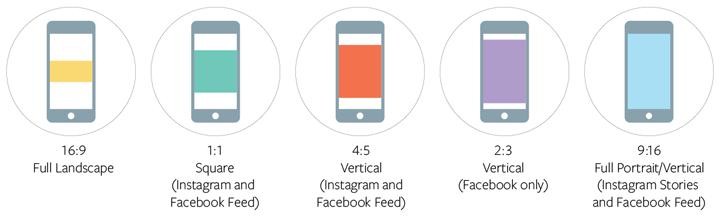
You should also note how different placements within Facebook will impact how users interact with your content:
Timeline – Friendly to images and videos, the easiest to scroll right past so take advantage of that 9:16 ratio, CTA’s are baked into the description or can be added underneath the post as the first comment.
Stories – Friendly to images and videos, cheaper to advertise on because it is a smaller group that typically uses stories, 9:16 ratio is a MUST here or you look out of place, CTA’s are swipe-up actions so be specific when you are telling your user what you need them to do unless you’re utilizing the space as added value. Can be populated utilizing Instagram so you do not need to work directly from the Facebook platform.
Reels – Exclusive to video, 9:16 ratio is also a MUST, the max duration is 60 seconds, and there are no available time extensions on reels like TikTok based on your audience size. Unless working with a specific base like a community or an influencer this will typically only be populated by Instagram, engaging with reels often requires the user to be redirected to the Instagram platform which in my opinion is a true hindrance to potential engagement, by the time I’ve clicked “comment on Instagram” I am already fed up with how tedious it has been for me to share a comment.
Communities – Allows you to curate a very specific audience and gain valuable insights and feedback, if active and groomed well it will also be where you will notice your highest engagement, friendly to various mediums including PDF attachments. Great if your audience is part of a more mature blue-collar demographic as they will prefer Facebook groups to other types of communities (Slack, Discord, etc.)
Pages – All pay-to-play, extremely difficult arena for organic engagement unless you are within specific topics like news, TV, celebrity gossip, influencers, and so on. Accepts various forms of media like photos and videos. Benefits include the ability to go live (which I have seen perform better in groups still) and the ability to gather positive reviews on your page directly from your audience which you can cross-utilize.
The Good Ol’ Conclusion
PHEW, that was a lot of information, if this was your first time as a marketer being firehosed with information know that surely it will not be your last.
Was there anything I missed? What do you think is the most important factor to address when using Facebook as a social media channel? I look forward to your feedback! Be sure to tell me in the comments what channel you would like covered next!
Signing off for the day – until next time.
-Claudia Lopez
 Claudia Cherrington Lopez